Koti Samjhana
Spring 2025—Nepal School Competition
Designed in collaboration with Jess Nolasco and Adan Arroyo
Nepal
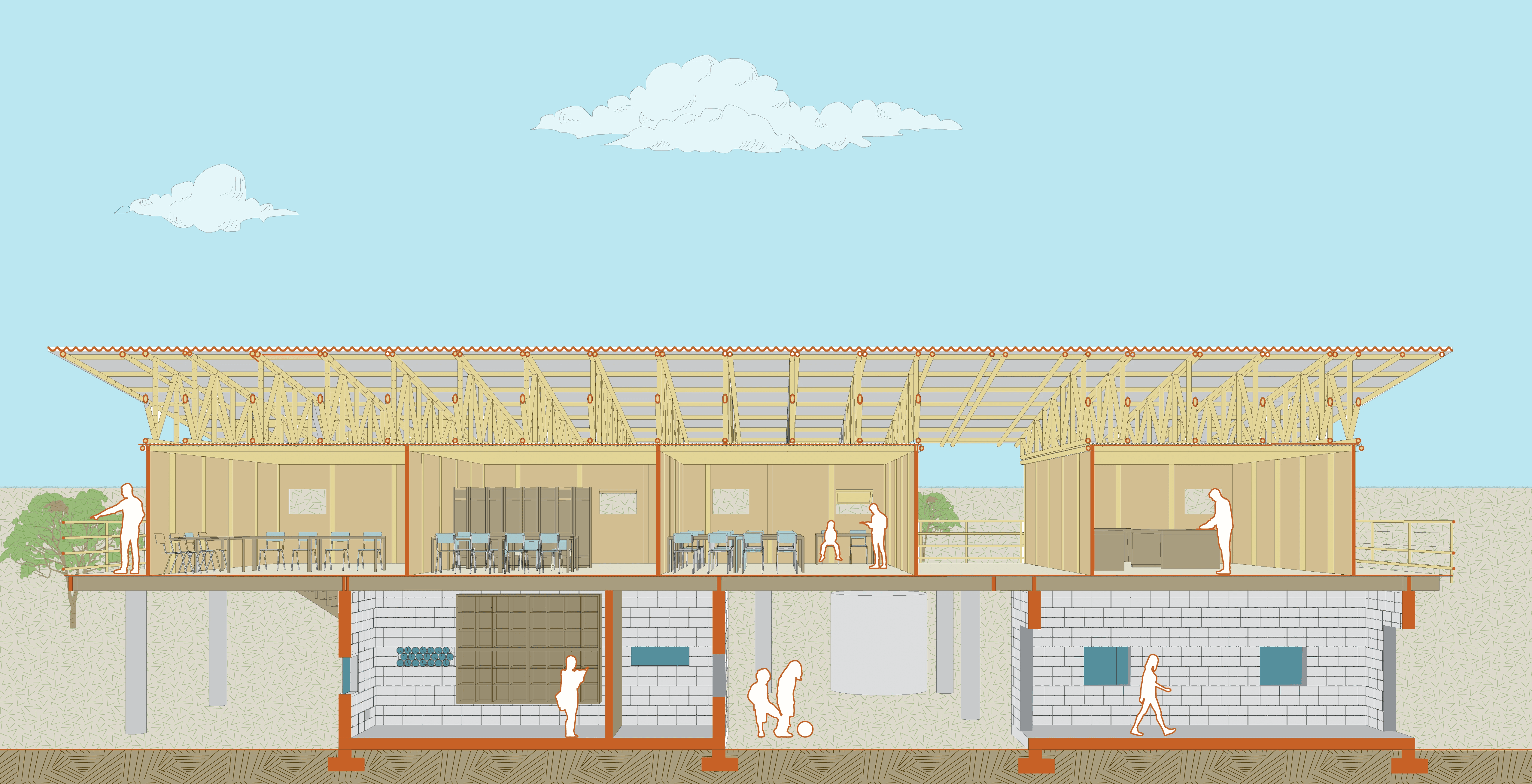
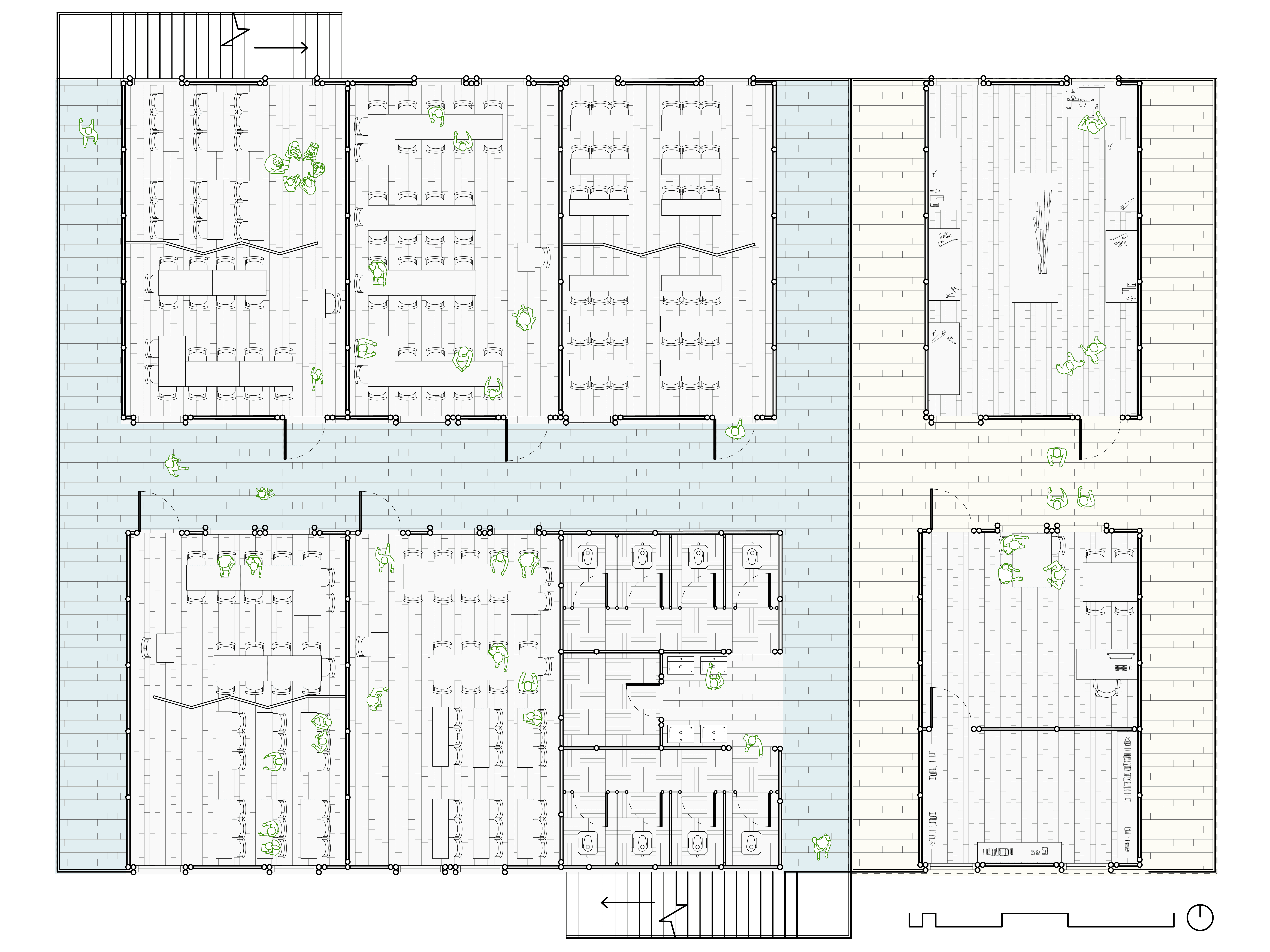
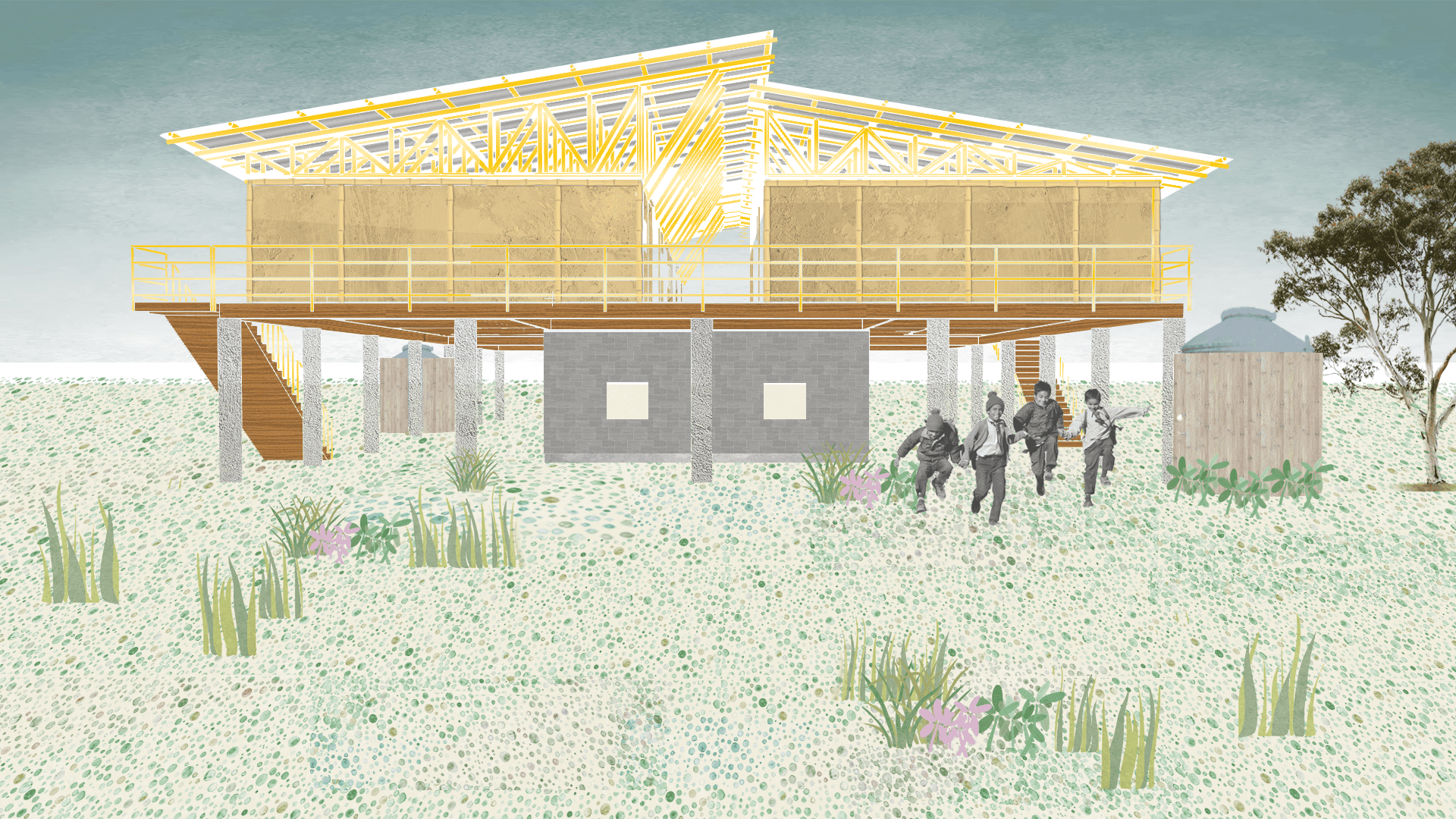
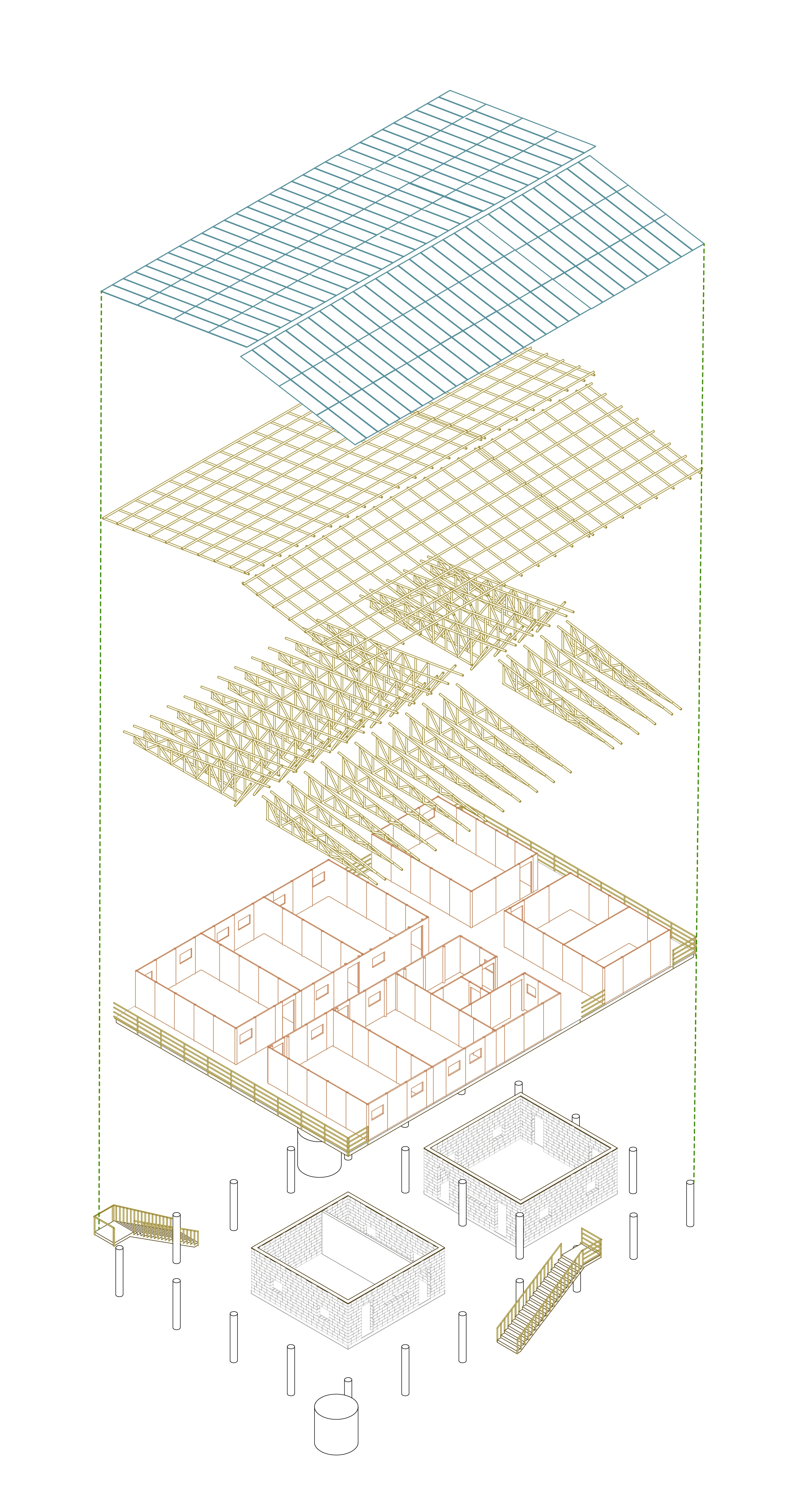
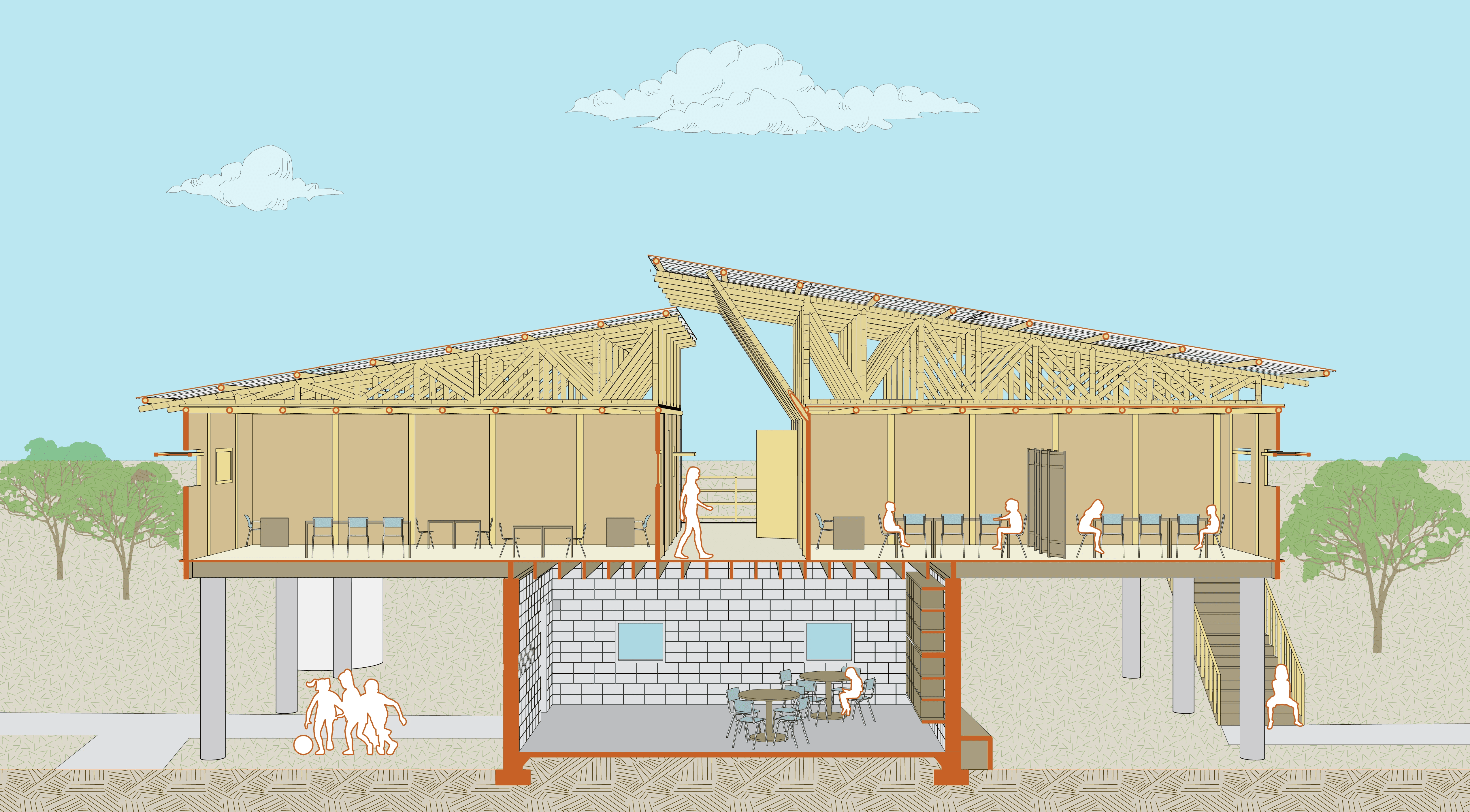
Designed as part of a competition for a school in Nepal Koti Samjhana draws inspiration from the earthquake resistant Koti Banal vernacular of the region. Our design is made up of a series of modules with a square base module below and a two lightweight rectangular units above. The lower base module is made from steel reinforced concrete masonry units used for their seismic resistance which sit on an elevated concrete slab. The upper rectangular units are constructed of bamboo which is an ideal material as it is lightweight, economical and environmentally sustainable and has proven to be more resilient than wood in case earthquakes. By anchoring the structure with heavier materials at the bottom and more lightweight materials on the top, the school follows the structural logic of the Koti banal. The ground floor houses more public programming such as the multipurpose space, kitchen, and dining room. While flooding can be mitigated on the lower level through the use of a raised slab foundation, the second floor sits entirely on stilts to keep the classroom spaces safe from potential catastrophic flood events. The implementation of a double roof made of corrugated metal allows for the collection of rainwater in two 3500 gallon water tanks and creates the opportunity to mount solar panels for clean energy.
The lower CMU modules are 540sq ft each, and we propose building the kitchen next to the multipurpose room as part of phase one. Phase two consists of additional programming, primarily workshop space for folks in the community to learn bamboo building as well as repair techniques for when the school needs it. The modularity of the design allows for further expansion with more modules either to the right or left of either of the phases for additional programming such as lokhta paper making and woodworking. Koti Samjhana serves not just as a place for learning, but also as a place for communities to come together to remember and cultivate the practices that make them resilient.