Bangkok House
Spring 2025—Construction Technologies—Ilva Dodaj
Designed in collaboration with Jess Nolasco & Jenna Vogel
Bangkok, Thailand
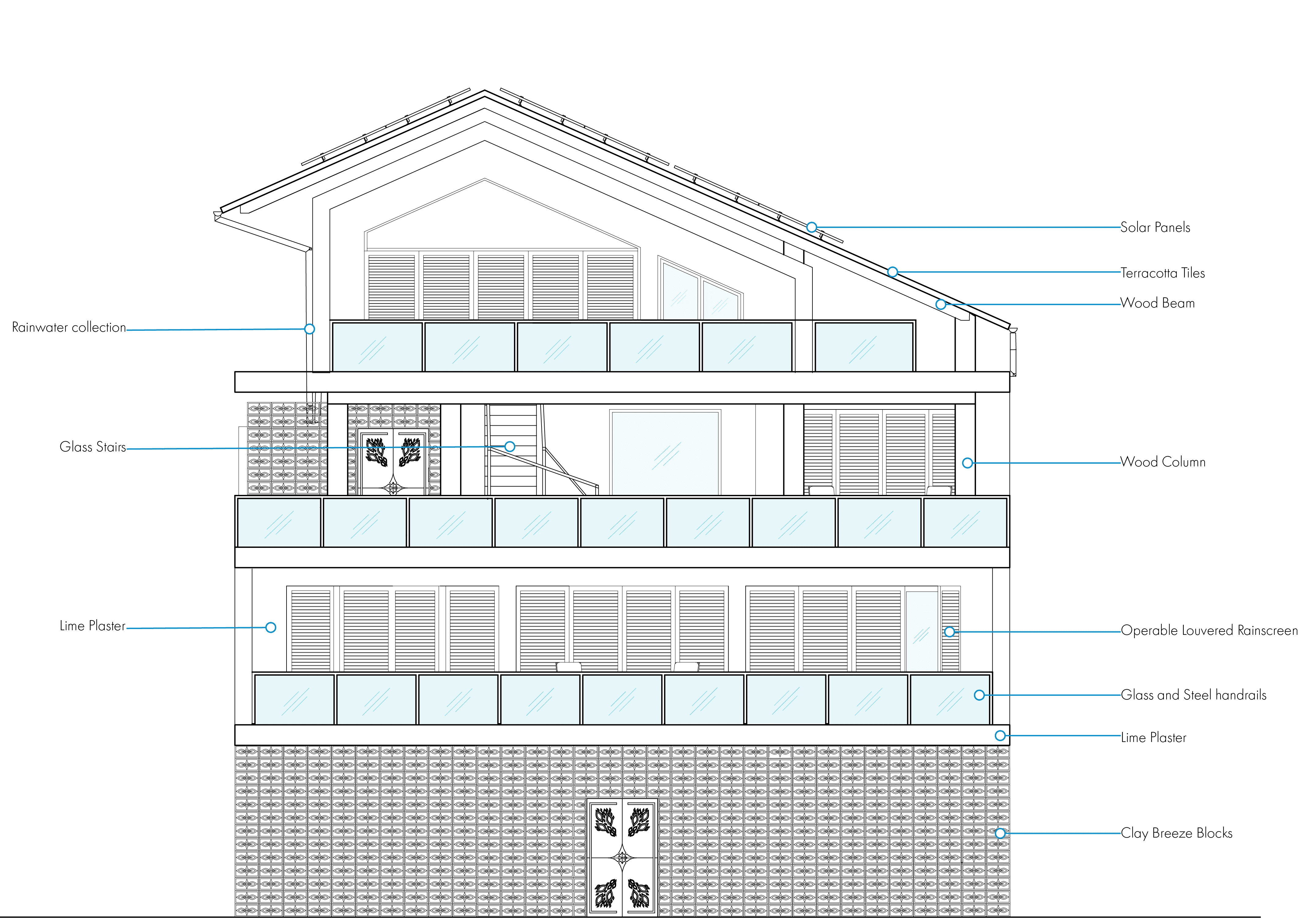
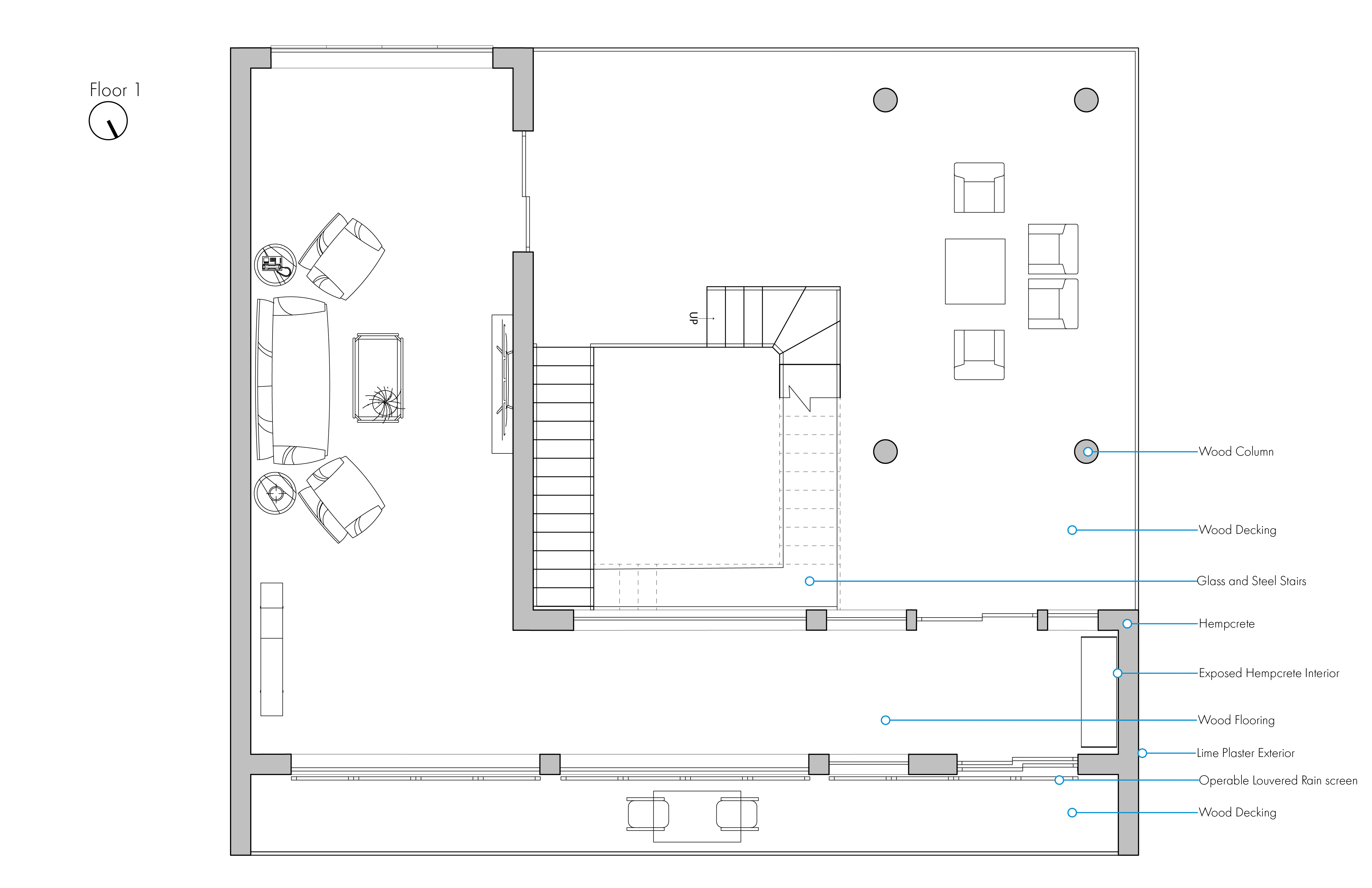
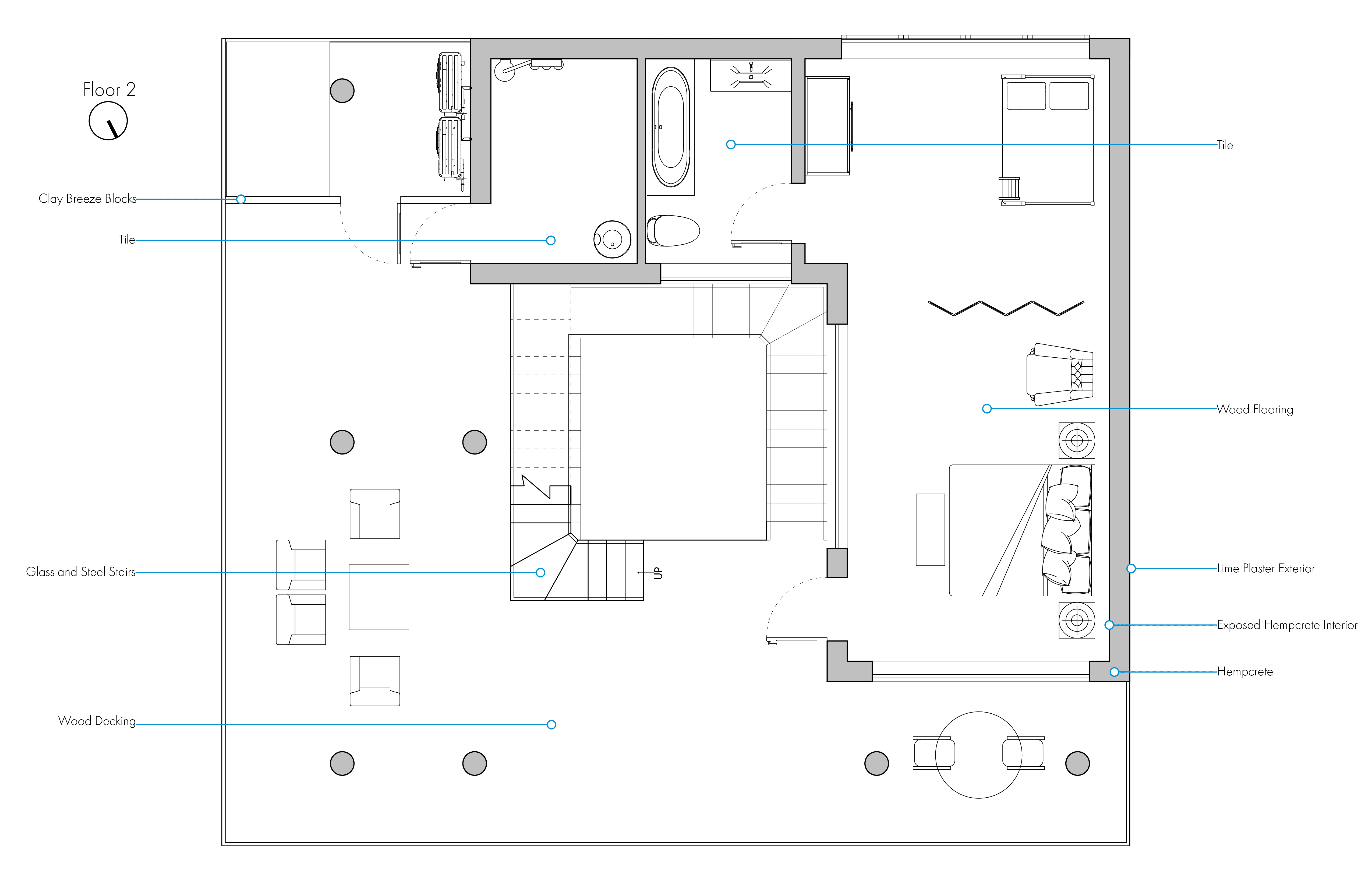
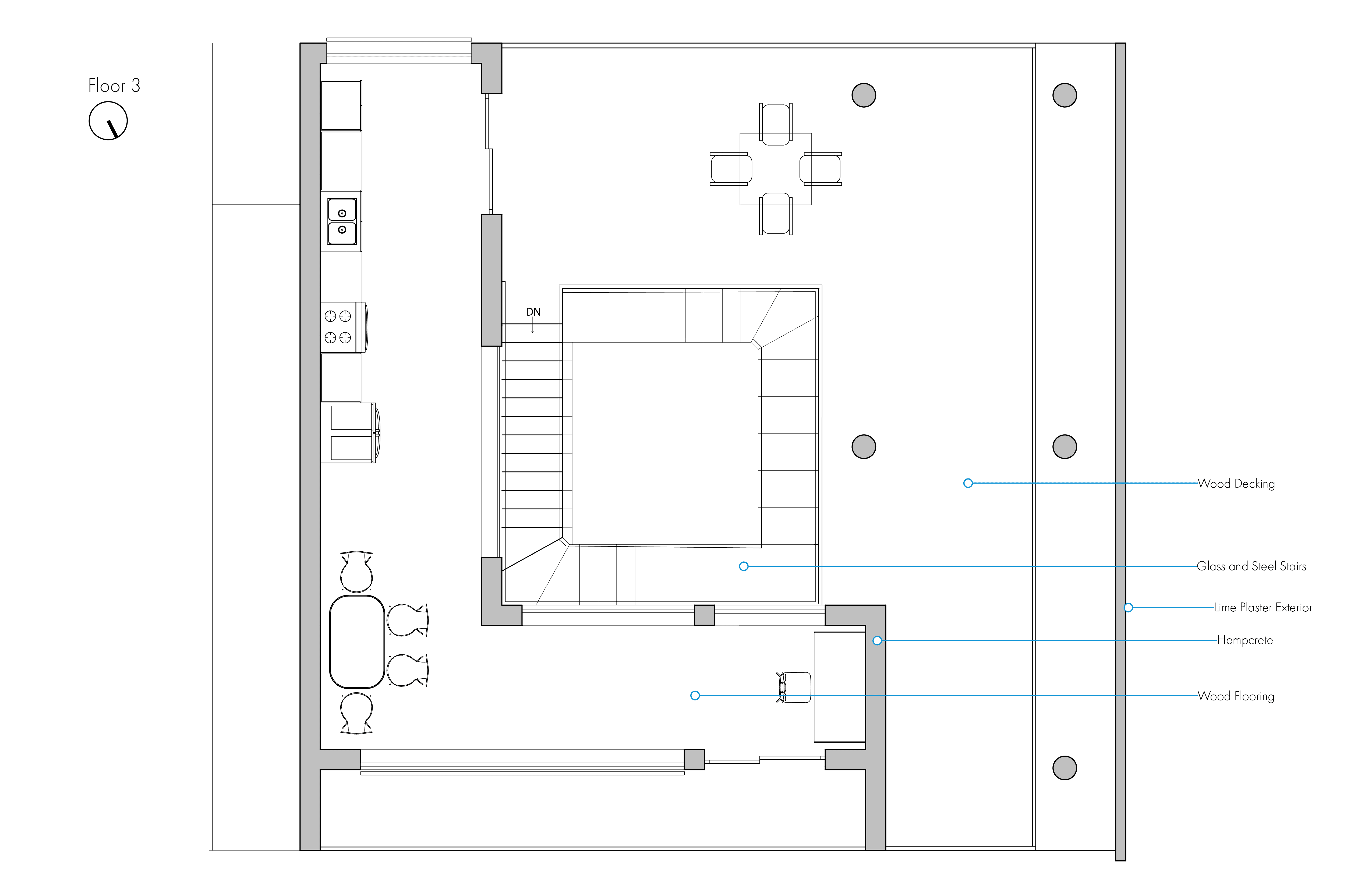
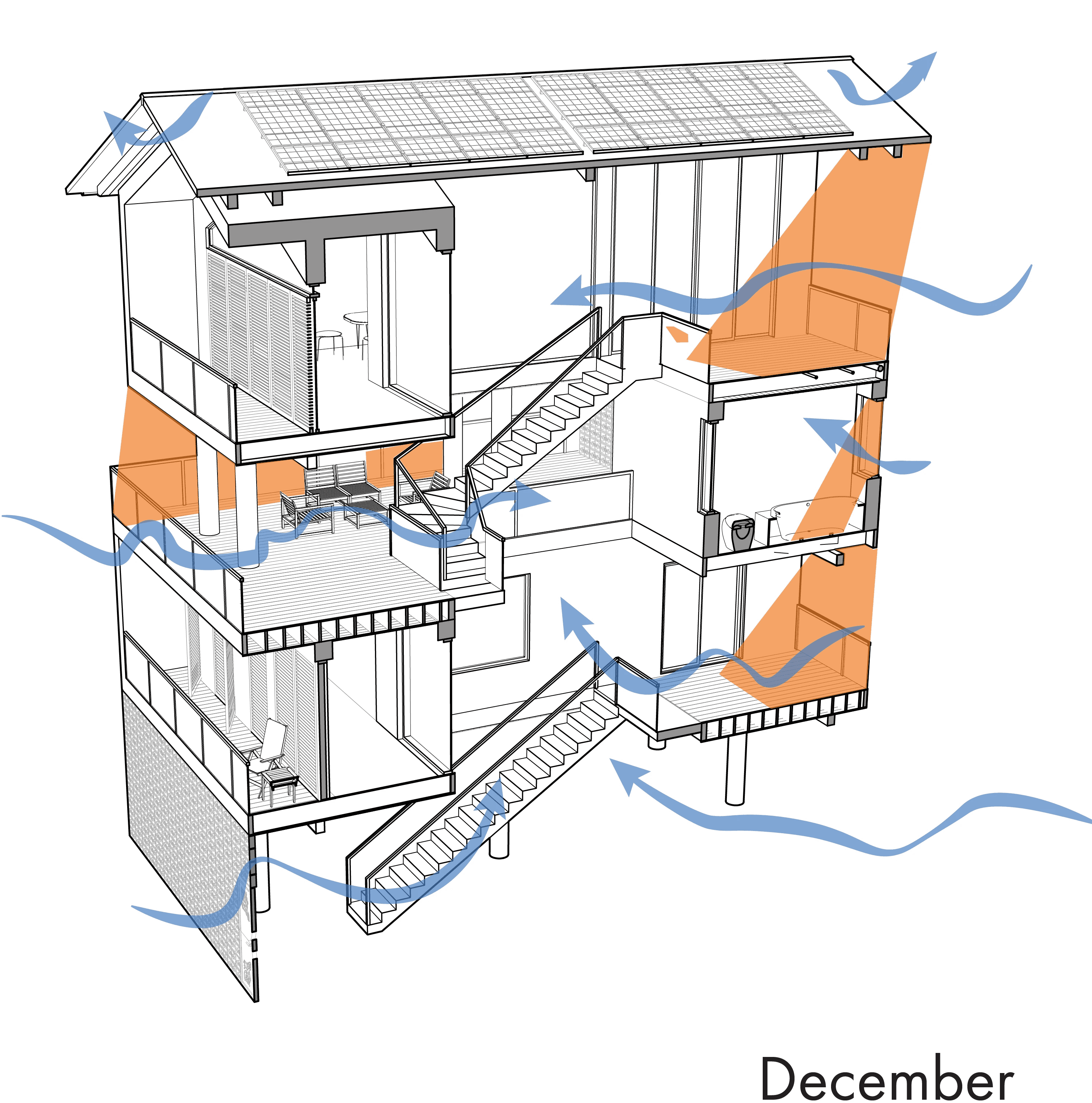
Located in a high-risk flood zone in Bangkok Thailand, this house sits on an elevated wood pier foundation 10’ off the ground. The hot and humid climate in Bangkok presents many challenges especially when it comes to energy efficiency. By utilizing passive systems that consists of thermal mass, cross-ventilation, shading and rainwater collection we were able to create a more energy efficient home.
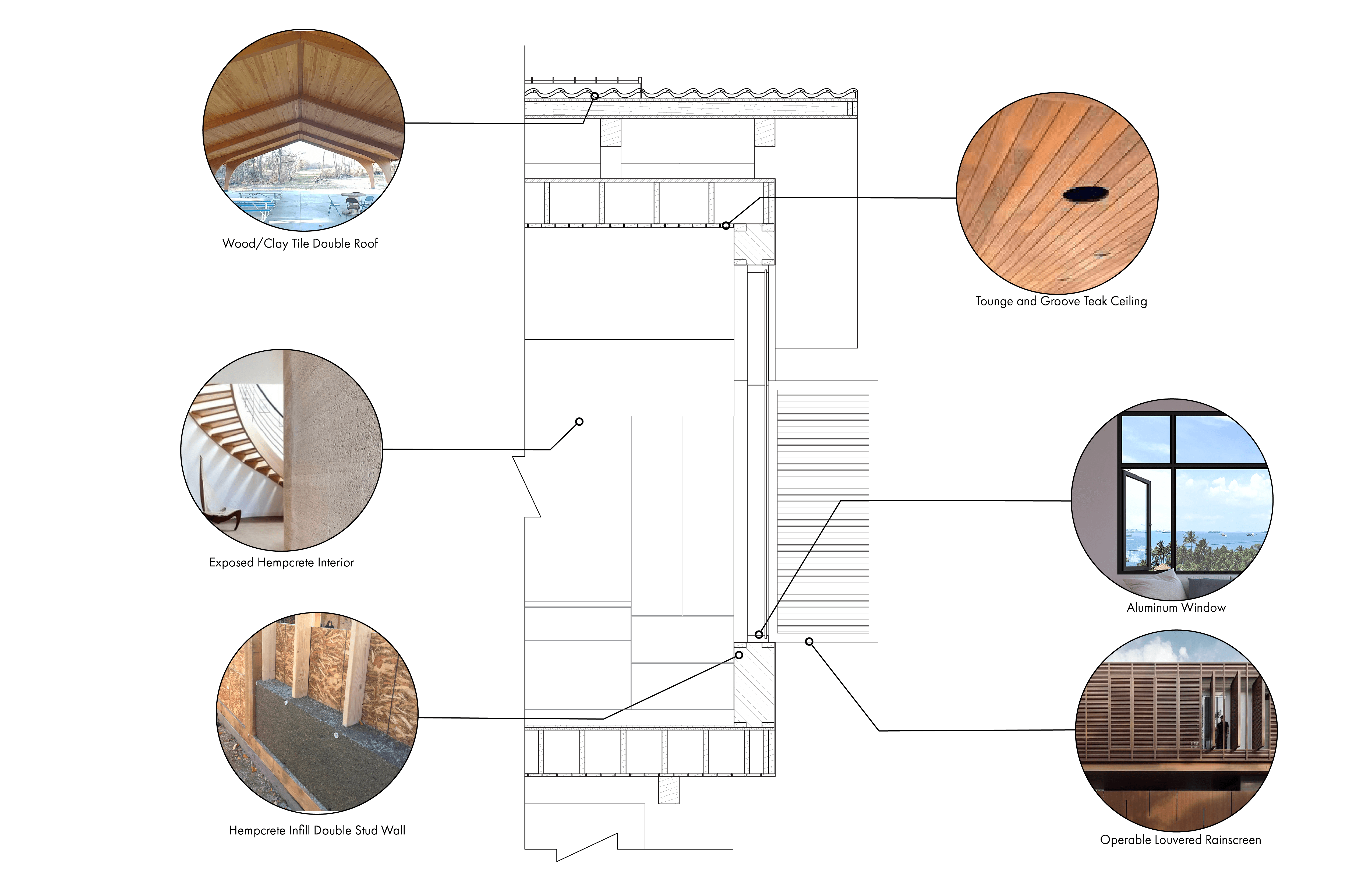
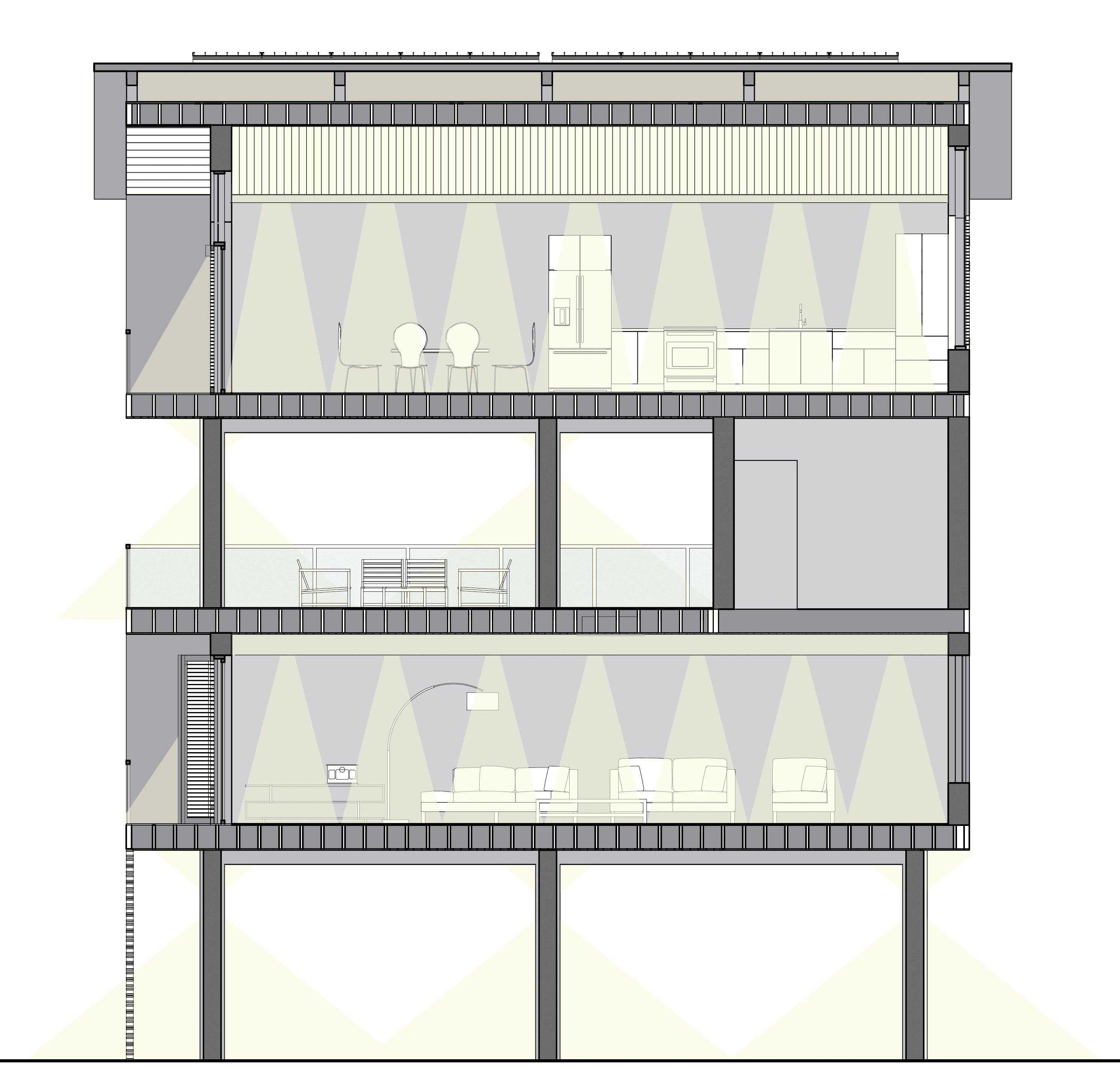
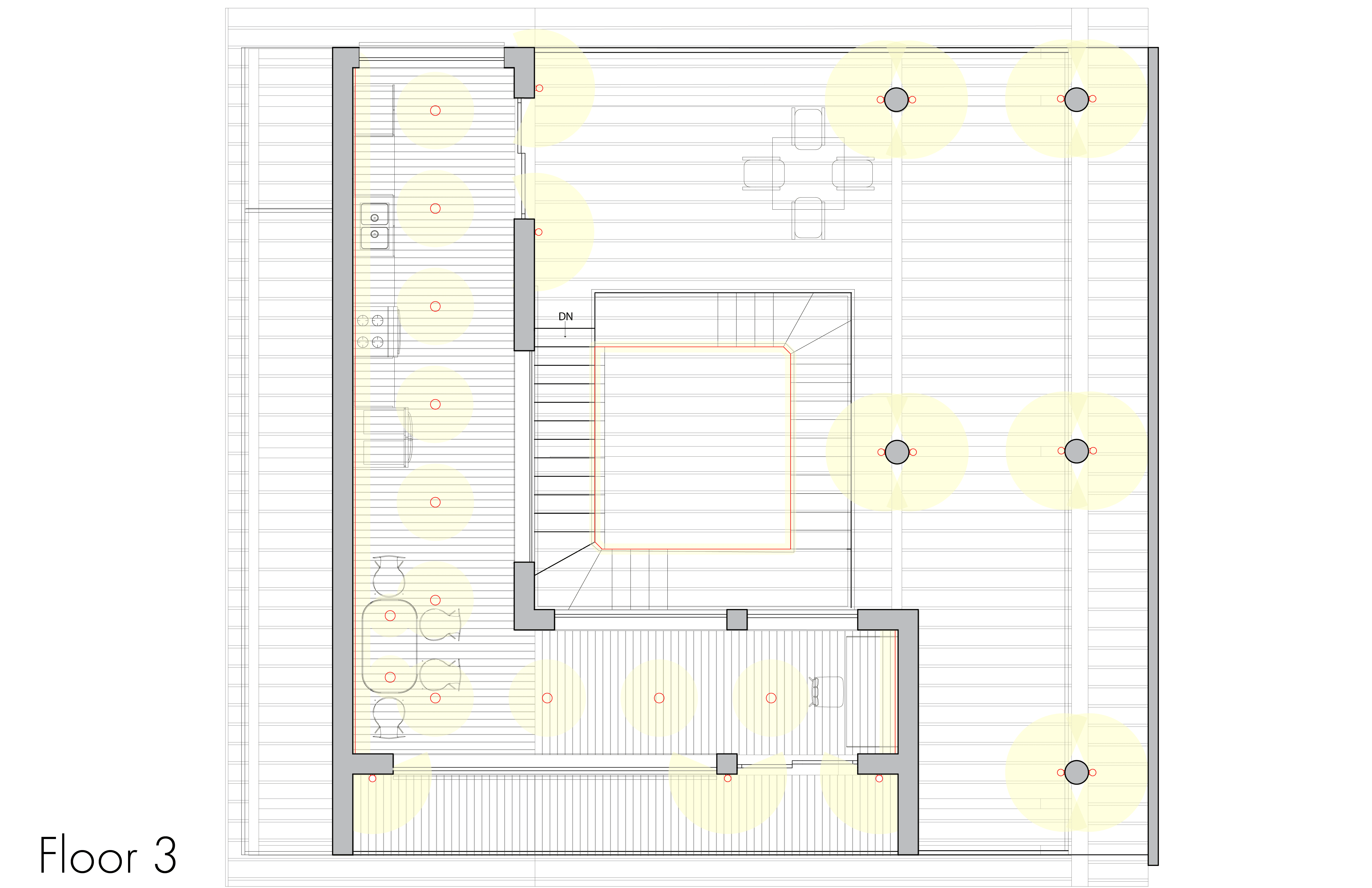
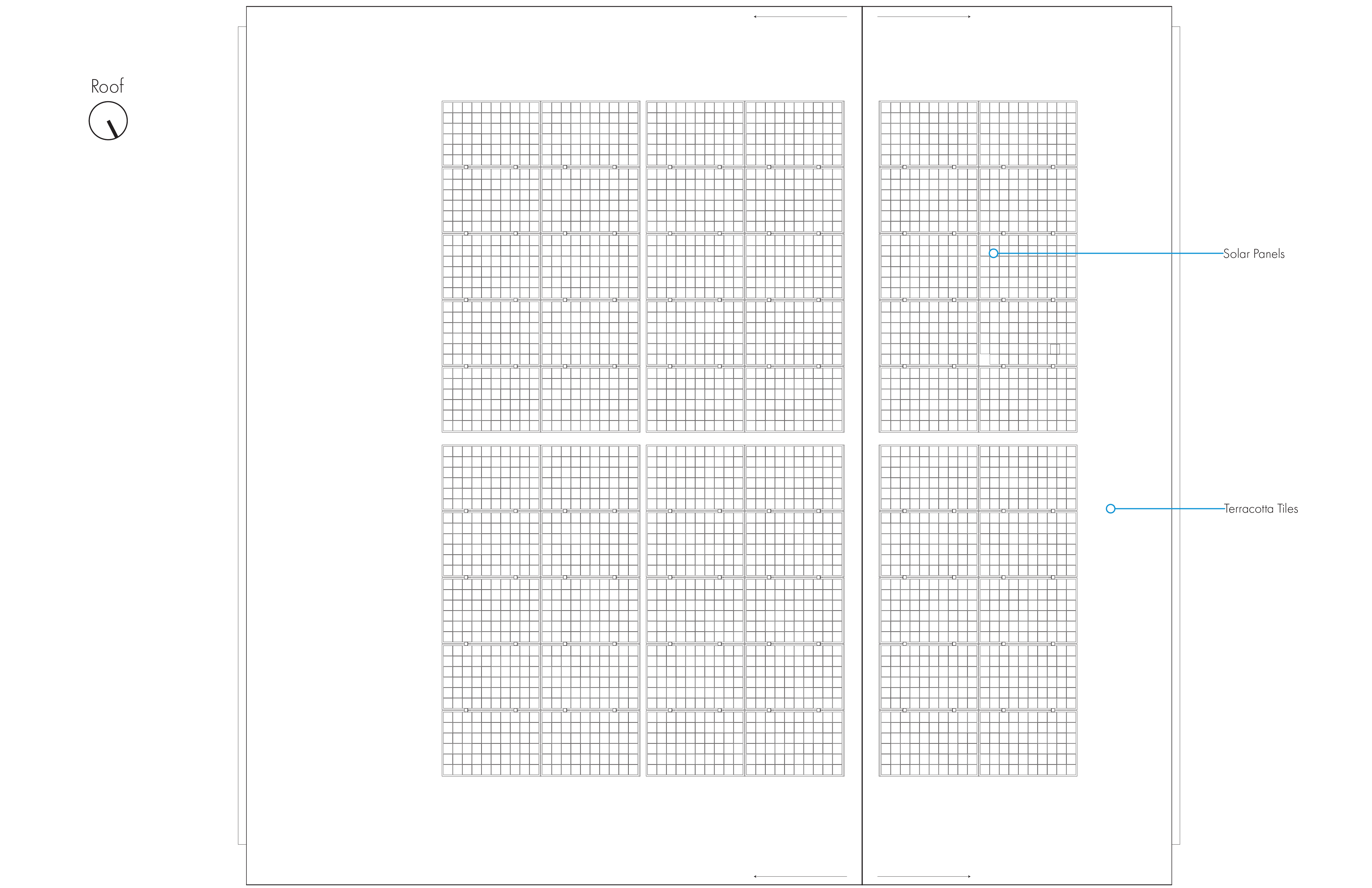
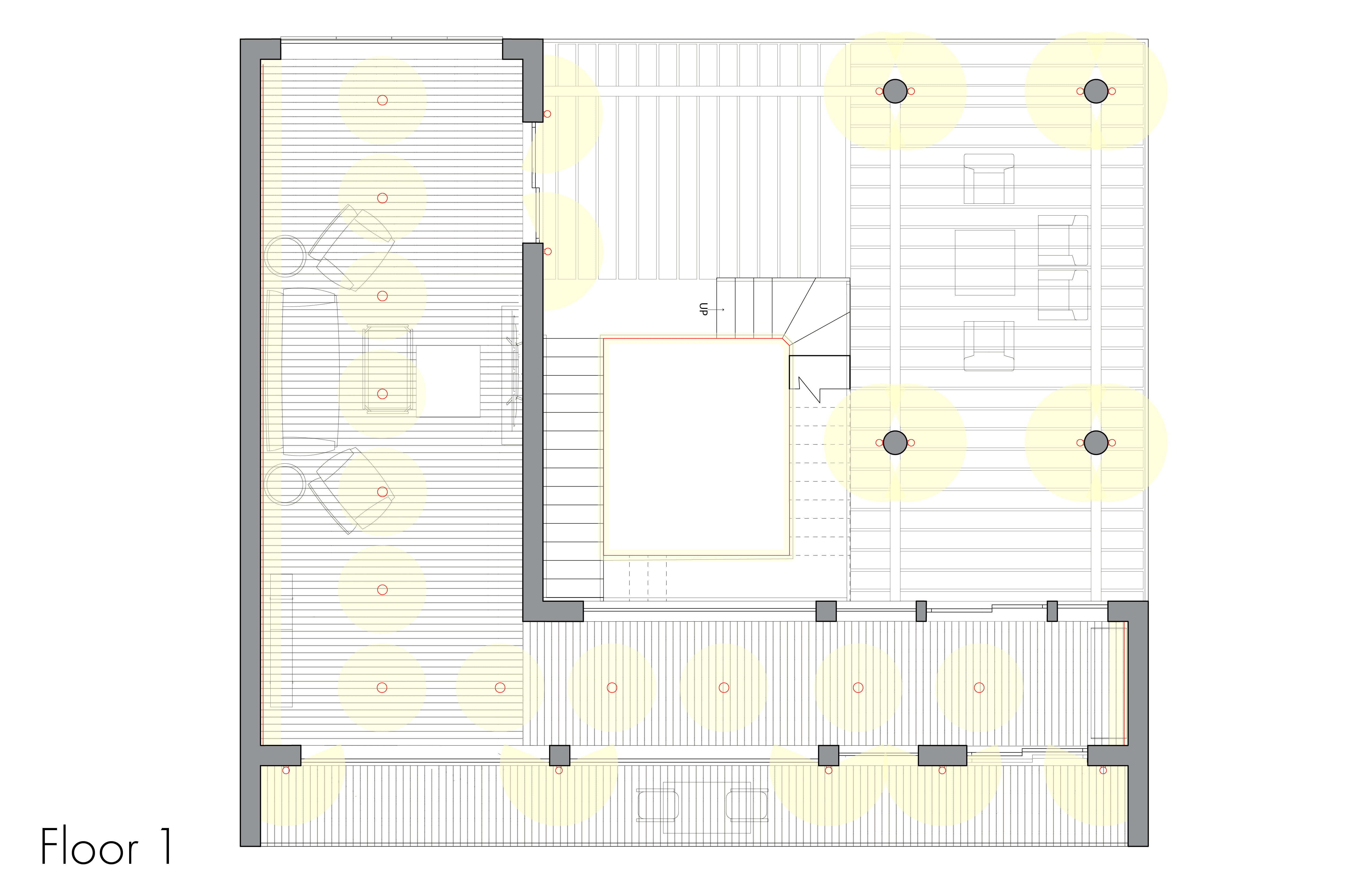
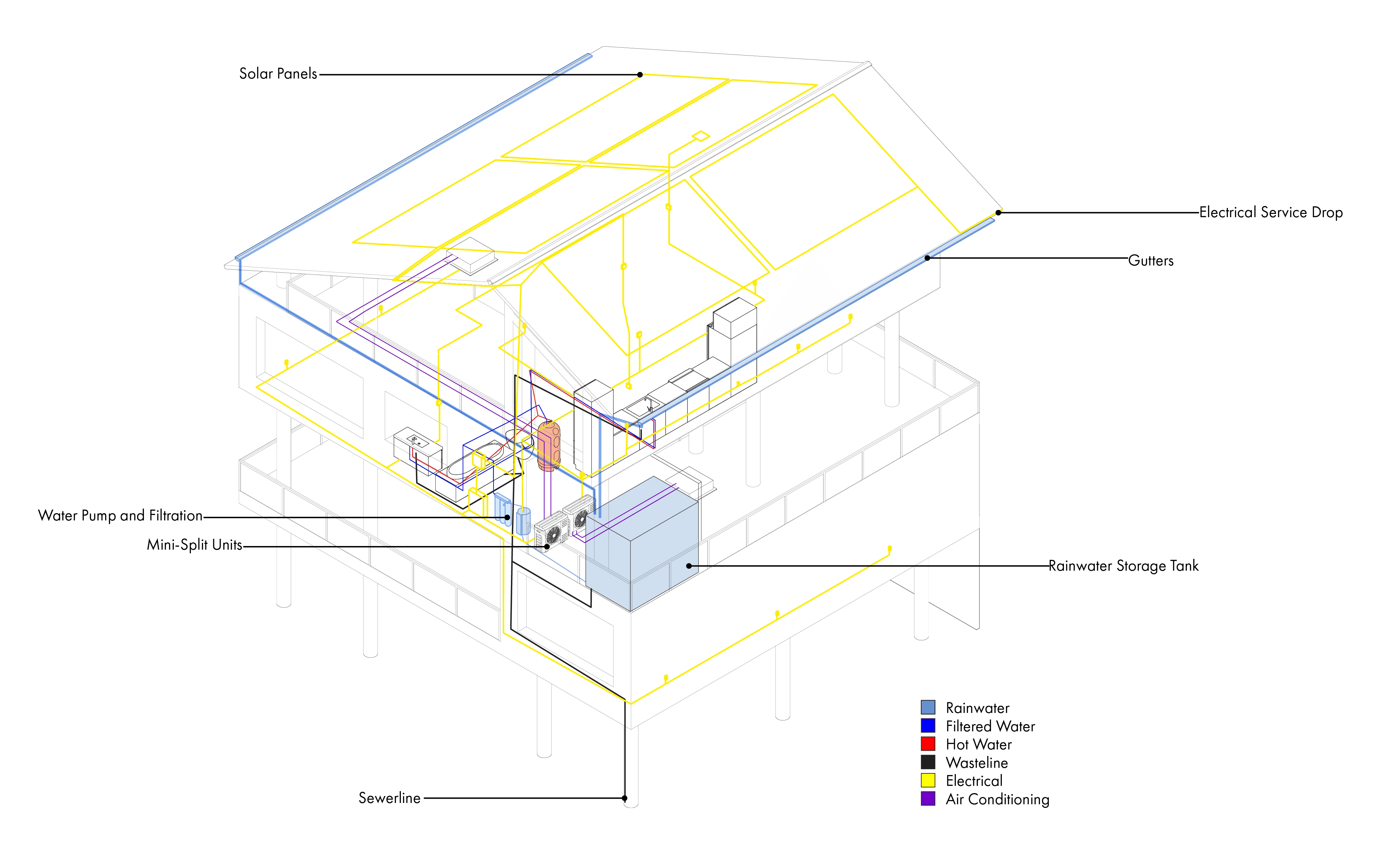
Centered around a courtyard, the program is stacked to allow optimal airflow during most of the year, with prevailing winds from the southwest and northeast creating cross and stack ventilation. Facing northeast, the house gets minimal direct sunlight during the summer months, with the overhanging roof creating additional shading along the East and West sides. The roof surfaces are also covered in solar panels to maximize energy production during peak sun hours. Bangkok endures a monsoon season from July to October, averaging about 64in a year. Adding a rainwater collection system takes advantage of this condition, allowing the house to be as close to self-sufficient as possible. Drawing on Thai vernacular architecture, our house is primarily made up of local tropical woods and utilizes hempcrete for insulation. Hempcrete is an ideal material for humid climates as it is breathable and helps absorb moisture. Daylight analysis was done using Sefaira in order to help design adequate shading as well as design an interior/exterior lighting plan.